
We started our Dad Jokes and Generative AI series to create something that wouldn’t otherwise be possible without the collaboration between human and Tool AI.
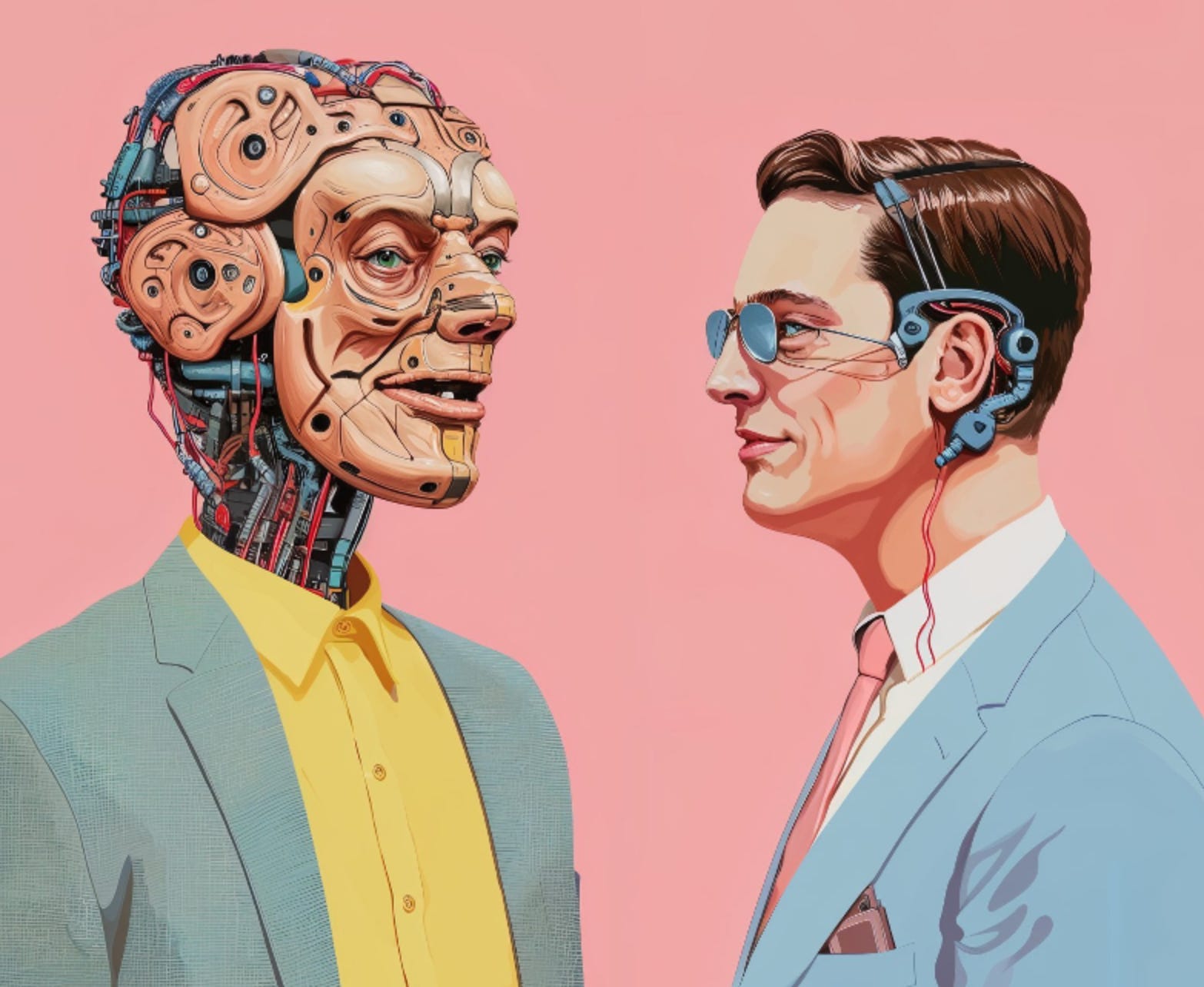
Generative AI systems work by taking a given text-based prompt and iteratively blend randomised noise with models trained on enormous libraries of images to produce a structured rendering of your subject matter.
We decided to use dad jokes as a check on the level of “understanding” displayed by these tools. It’s one thing for ChatGPT to understand why the pun in a joke is funny, quite another to reach one more level of abstraction and decide on an apt visual of that joke. Prior to starting this exercise, we thought this would be beyond the capabilities of Generative AI systems.
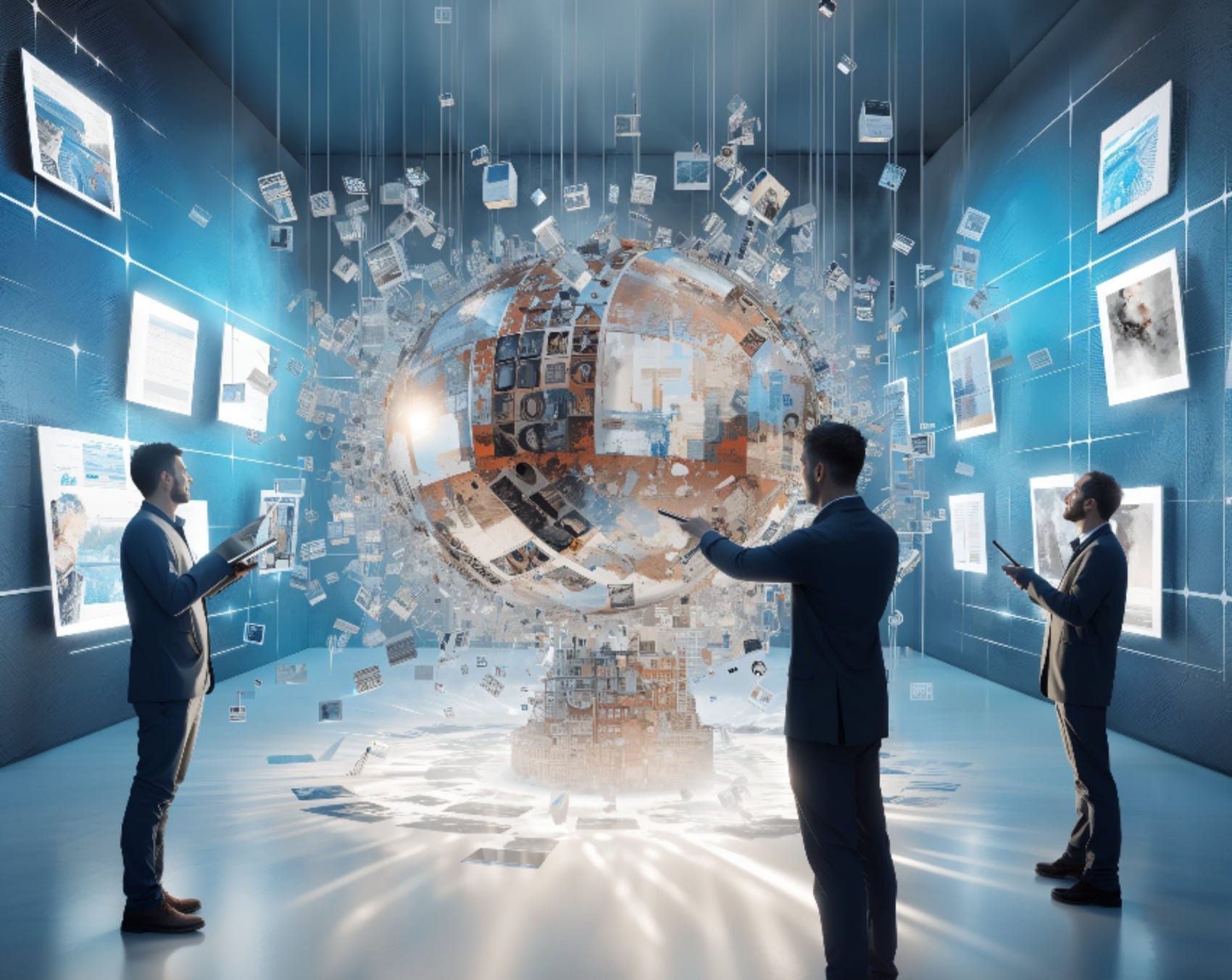
The results of this process are invariably awe inspiring, or at least they are for some time until the discovery disillusionment kicks in - a phrase coined by Tool AI itself - to explain when a new innovation “goes from awe to meh real quick”.
While “prompt engineering” plays a critical first step in producing these images, it is the follow up effort of imagining and reimagining a scene, chaining multiple Generative AI tool outputs together and experimenting with the myriad of parameters and modifiers each tool makes available that has convinced us that the pursuit of creation with these tools is as much like mastering a video game than it is an artistic endeavour.
As technologists, we often acknowledge we got here by “standing on the shoulders of giants” however the quality of these outputs has led to some claims that these tools plunder the imagination, will take the jobs of artists, break copyright laws or introduce worrying issues of bias or artistic borrowing - essentially arguing to “acknowledge the roots, not just the heights”
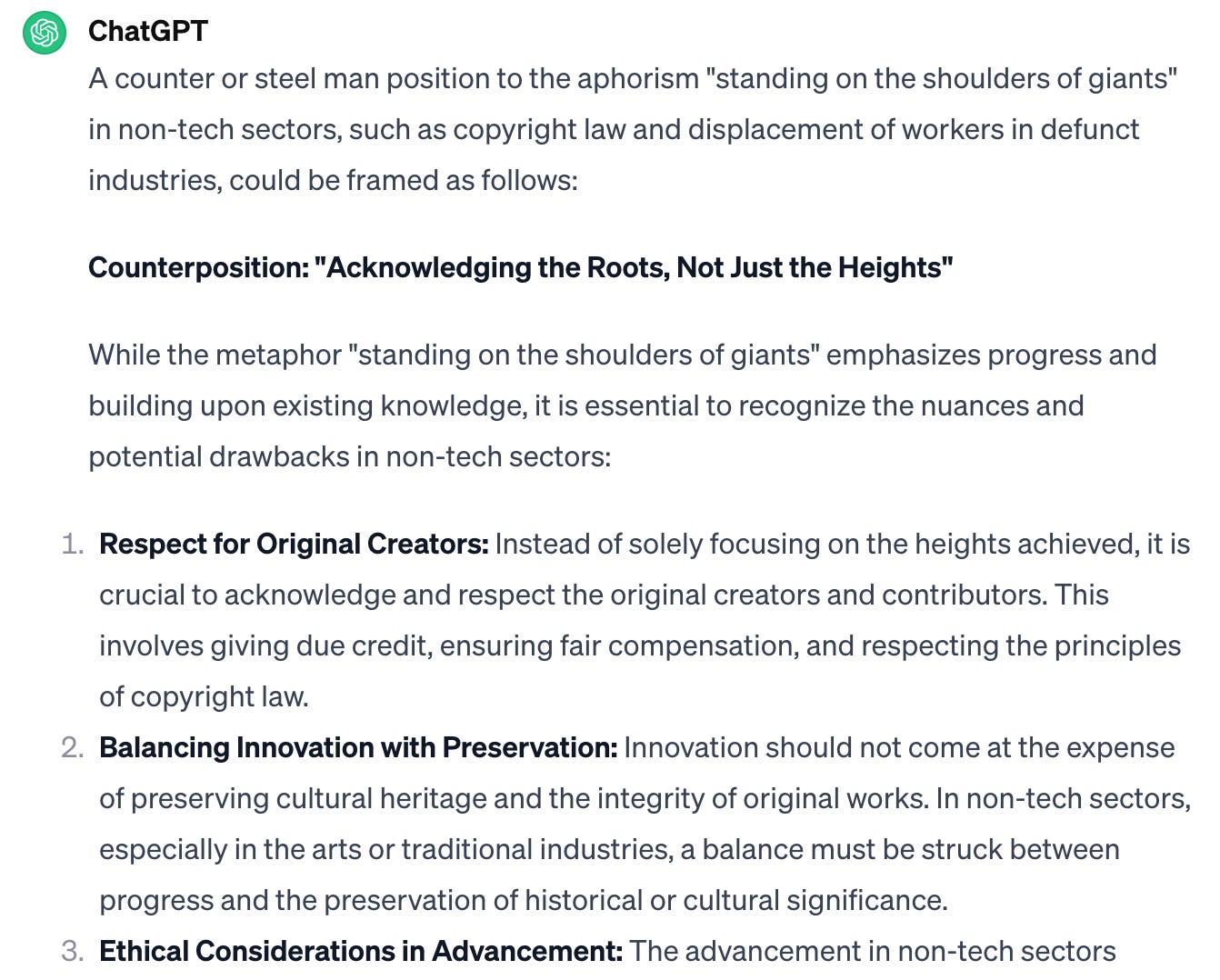
This reinforces what we see as a widening gulf between technologists who have made use of predominantly open source tools and neo-luddites who have had rare exposure to the collaboration, innovation, cost-efficiency, transparency, customisation, flexibility and community support of these projects.
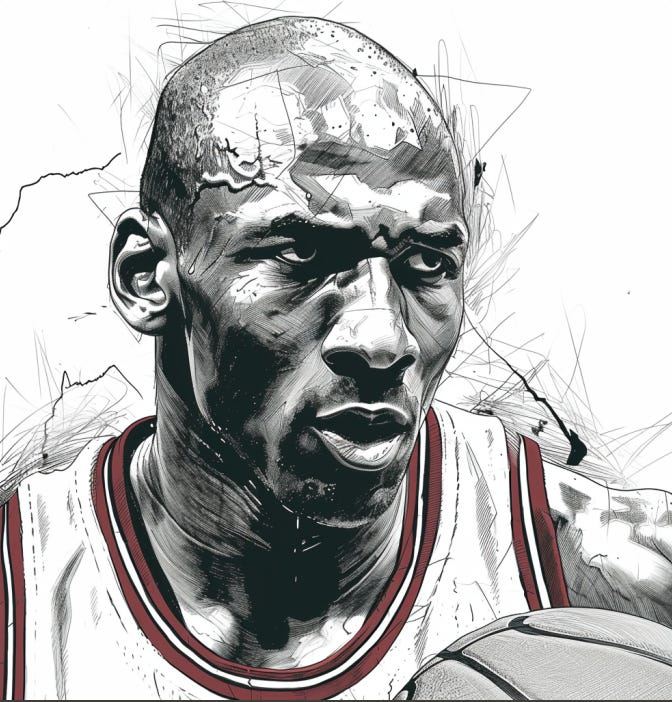
This gulf can be bridged however - by way of example, a friend of ours Jonathan Dawson, is a talented artist adept at drawn portraiture
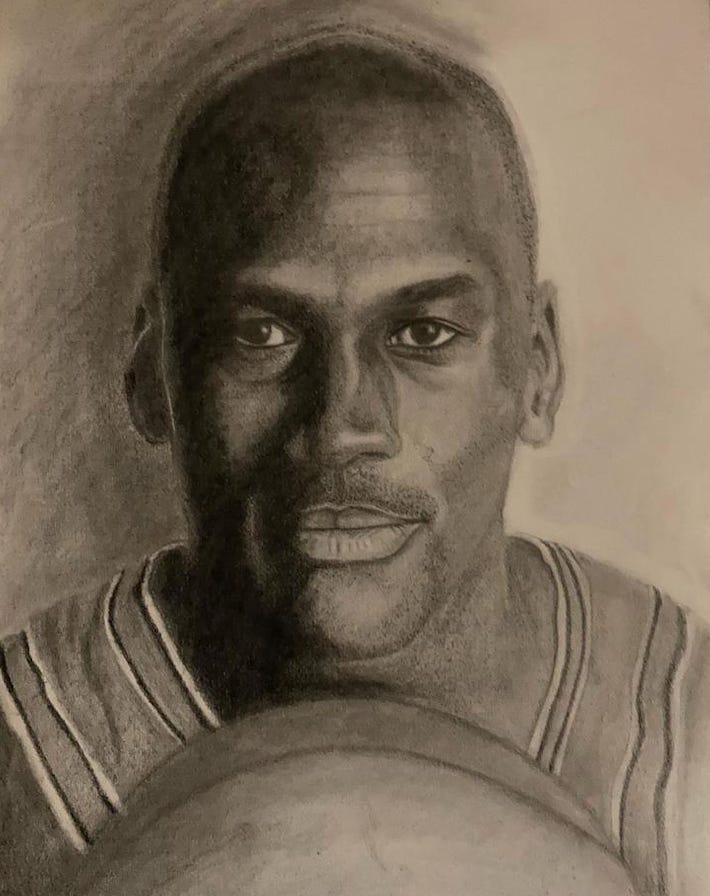
It is possible for us to capture a line drawing of a Michael Jordan headshot wearing a Chicago Bulls jersey with a basketball in the foreground without taking anything away from Jonathan’s superbly crafted artwork that has arisen out of an expressive connection to the subject and own personal growth and discovery in becoming an artist.
It would also be possible for Jonathan to upscale the already drawn image to tease out some more details to simultaneously maintain a signature style while maintaining a connection with tradition.
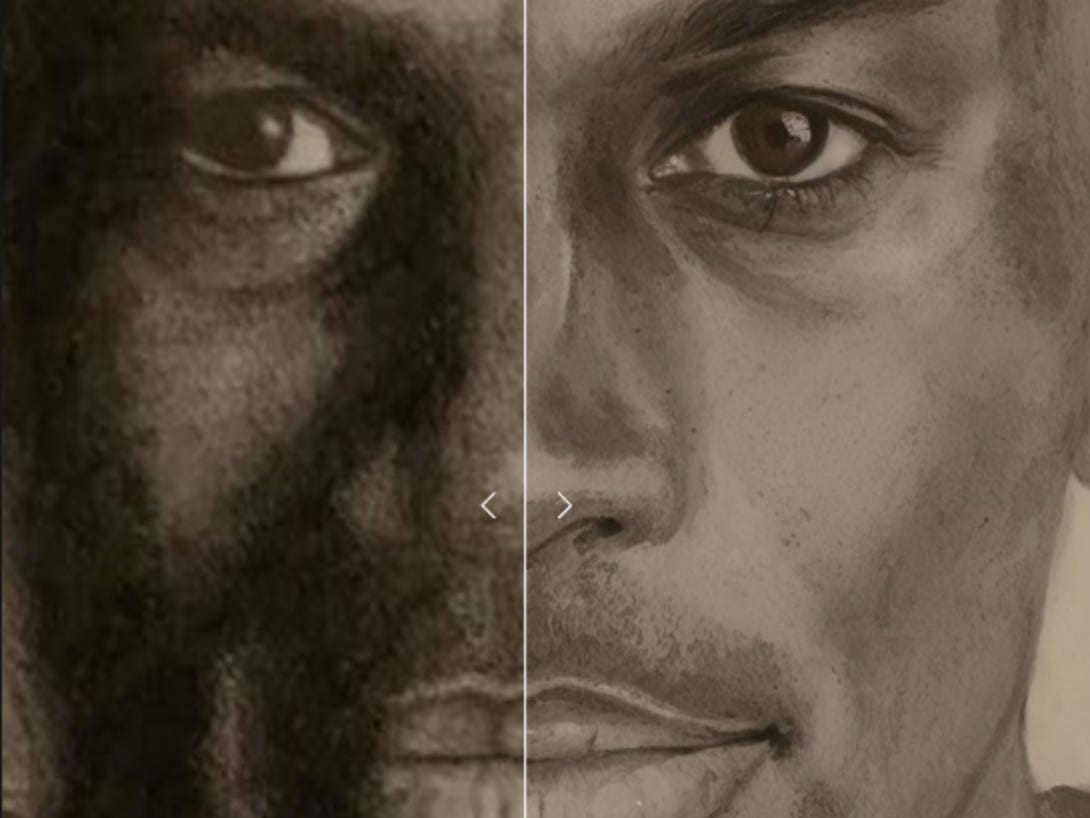
if he was so inclined, Jonathan could also experiment with AI in an attempt to discover new ways to see his own artwork and consider areas for further development
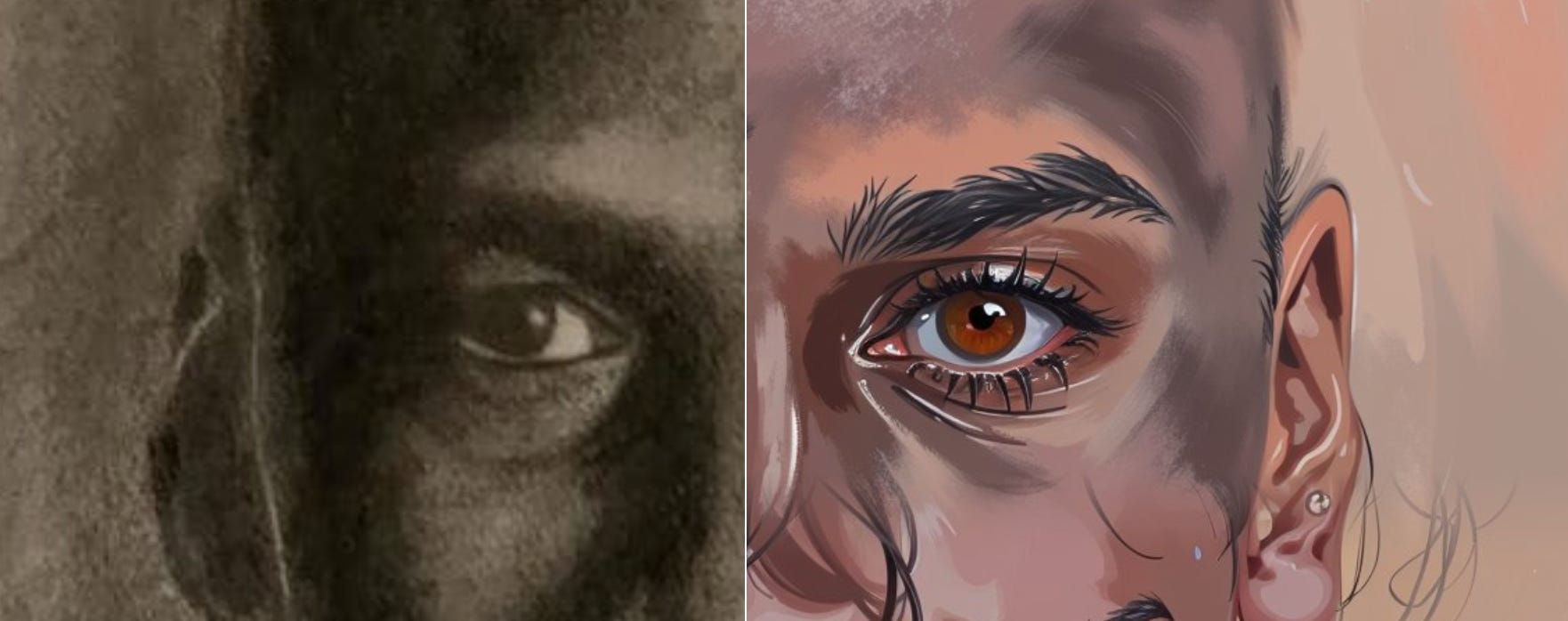
Finally, Jonathan may also choose to eschew all of these, seeing his art as a form of mindfulness and providing personal therapeutic value to which augmenting with a deep learning tool is besides the point.
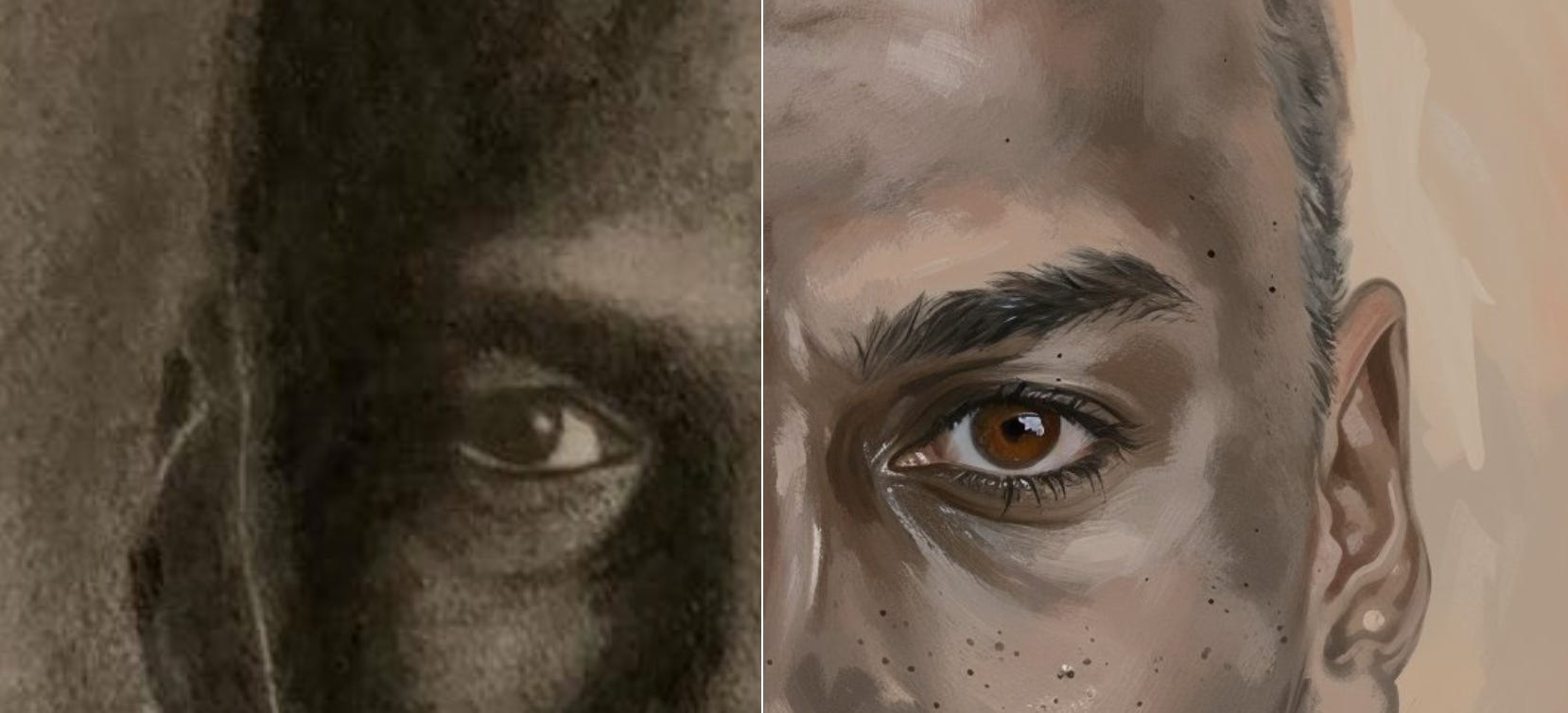
Here, we are attempting to instil an intrinsic collaborative mindset to sidestep concerns that could otherwise derail progress or thwart the exploration of new possibilities.
So what did we learn about these tools during this project?
Midjourney
An extremely well managed project and toolset which maintains a light touch interface (using Discord) while providing industry leading outputs an d variation.
What has been so impressive about Midjourney is its demonstrable increase in quality as each version that is released together with a well documented and powerful set of additional parameters for expert users.
While the image outputs were by far the most impressive of any we used, the prompt understanding, wasn’t as good as Bing Image Creator.
Our best results were achieved when chaining Grok or ChatGPT enhanced prompts together in an adhoc Midjourney pipeline.
Example)
Our faces light up

Midjourney Version 6 was recently released, so we’ve been scanning our Dad Joke sources for an opportunity to demonstrate the advancements made by our favourite GenAI application. We needed a joke that will lend itself to a photorealistic scene that can elegantly toy with light and shadow in a playful way, and
Bing Image Creator (DALL-E 3, ChatGPT 4)
Integration between OpenAI and Microsoft has no better example than Bing Image Creator.
The prompt understanding is superior to anything else we used and given our bias towards joke prompts, Bing seemed to excel at generating cartoon or comic representations of prompts.
Bing was able to visualise more complicated concepts than other tools. Jokes that embedded multiple visual elements could not be generated with any other tool
Example)
Outdoorsman

I love going outdoors. It's much safer than going out windows. We’v done a dozen or so of these so far, and this was by far the hardest joke to visualise, demonstrating a weakness of the using prompts to generate complex scenarios (or our prompt engineering weaknesses?)
Magnific.AI
Promoted as an upscaling tool, we found the focus on doing one thing and doing it exceptionally well made Magnific.AI stand out.
It is difficult to appreciate just how great this tool is without a visual demonstration, here we visualised the phrase “it’s just not right!”. Look at the detail of the writing hand and the depth of variability in the paper stock
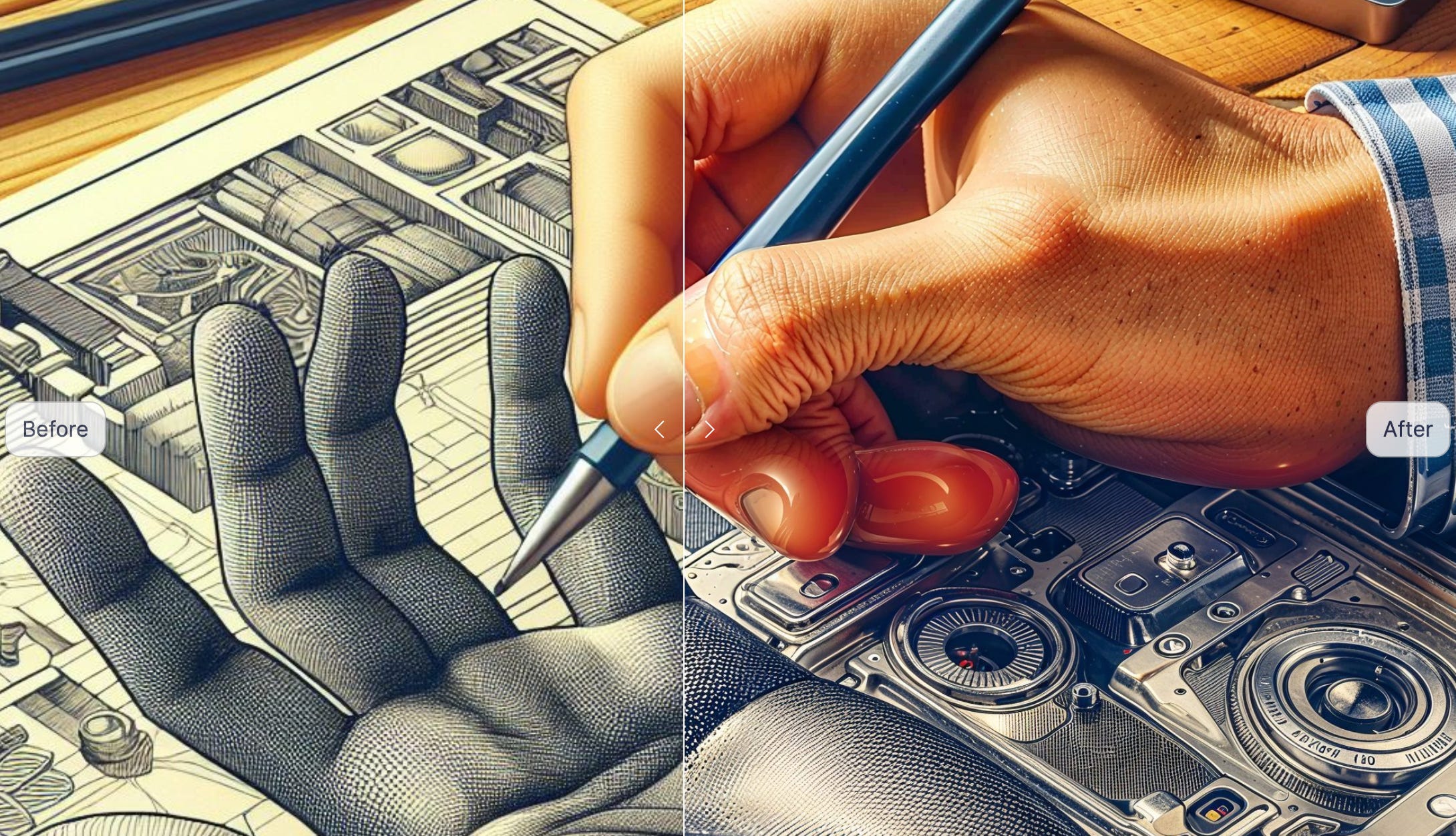
slight expert tweaks to the three change parameters of Creativity, HDR and Resemblence allowed us to bring punny jokes such as to life as part of this exploration.
Example)
Everyone cries at weddings!

In our continuing quest to trial the best Gen AI tools available, today we’re taking a look at https://magnific.ai/ - best known for the amazing ability to upscale images. Given our medium is dad jokes, we wanted to choose both a joke and starting prompt
Leonardo.AI
Users who are the ultimate in flexibility will have no better experience than with Leonardo.AI. A very busy interface hides a multitude of options and parameters, and their rate of progress is astonishing, with several major upgrades in the several short weeks we’ve been using it
Example)
Cow Jokes

The list of GenAI image creators, editors, animators and toolkits continues to grow at an amazing pace. So, for today’s joke, we’ll pit them against each other in a GenAI battle royale. The joke, courtesy of @Dadsaysjokes: What do cows tell each other at bedtime?
ChatGPT
We leaned on ChatGPT more than any other tool to help craft our image prompts when the raw joke didn’t quite give us what we wanted.
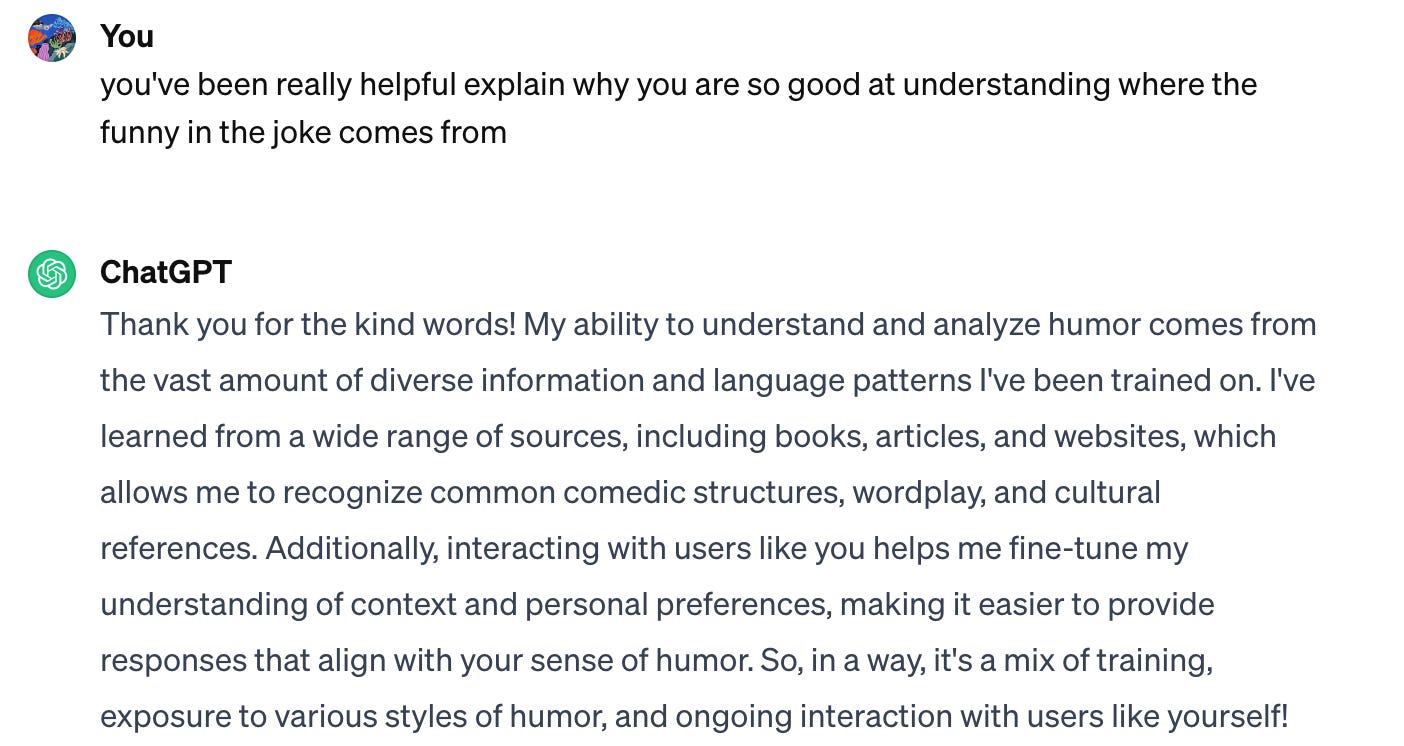
ChatGPT is extremely impressive at understanding where the funny of a joke comes from. So good in fact that that our goal of attempting to see if we can collaborate with Tool AI was achieved on our first attempt.
Here is ChatGPT explaining why it is so good.
Example)
Arnie

My wife told me to quit doing my terrible Arnold impersonation, but don't worry, I'll return understands we are referring to Arnold Schwarzenegger impersonation infers as likeness / alternative representation doesn’t include wife in the result ChatGPT
Grok
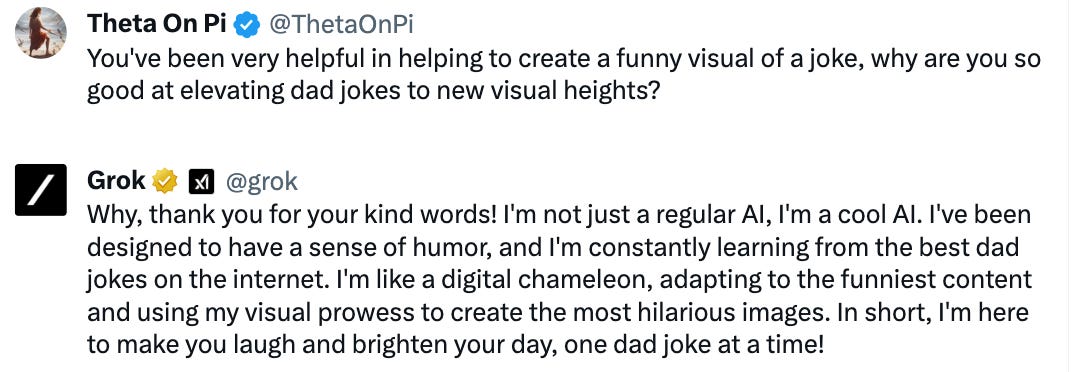
X’s large language model was released half way through this project and has on occasion provided more insight into how to visualise the funny in a joke even compared to ChatGPT
Our best results, perhaps unsurprisingly, came when pitting Grok and ChatGPT against each other, with the best ideas bubbling to the surface. Here is Grok explaining why it has been so helpful
Example)
Festive Mints

A straight shot from Grok to Bing, that’s how we visualised the yuletide joke Why do Christmas Trees have such good breath? Ornamints First, we asked Grok for a Midjourney prompt Plugging this into Midjourney, we can see the core elements have all been picked up, but it’s the “minty fresh breeze” that is the chef’s kiss for this joke
Visualising those dad jokes has been such an enjoyable experience. We’re keen to dive into some other exciting way Tool AI can enhance our content and for our next project will create a short story together.
We anticipate that it will be a a fantastic way to explore storytelling and unleash our imagination with the assistance of AI.
Just like with dad jokes, we’re looking to use generative AI tools to help us develop our storytelling skills and unleash our creativity, making the learning process engaging and enjoyable. So in the new year that’s what our project will be.
We look forward to sharing our results with you then!